Smartwatches Under $20: What Works, What's Decoration (Honest Review)
Affiliate disclosure: this page contains affiliate links — if you buy through them, we may earn a commission at no extra cost to you.
The short answer: a sub-$20 smartwatch is a good watch with notifications and a rough step counter — buy it as that and reviews say you'll be happy. Buy it as a fitness device and you'll write the angry review yourself: optical heart rate at this price wanders, sleep staging is fiction dressed as data, and calorie counts are a random number generator with confidence. Here's the feature-by-feature truth, and who the $17 watch genuinely serves.
What actually works
Time, always-visible or raise-to-wake: yes, and battery life embarrasses the big brands — a week-plus per charge is normal because the screen and radios are modest. Notifications: calls, texts and app pings mirror reliably on both Android and iPhone (reading is possible; replying mostly isn't — no speaker/mic worth using at this tier). Steps and move reminders: directionally honest — the trend across days is real even when the absolute count runs ±15%. The screen: brighter and sharper than a $17 device has any right to be; this is where the factory-direct math genuinely shows.
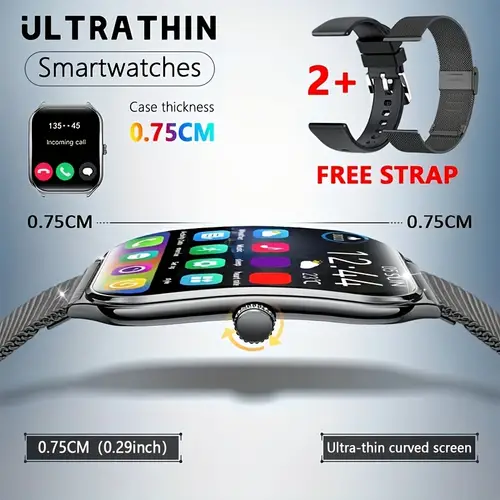
Fitness Smartwatch
Fitness tracking + notifications at 1/10 the brand price — consistently near the top of Temu electronics.
🚚 Free shipping on most orders · price at time of writing
What's decoration (the honest list)
Heart rate: fine at rest, unreliable in motion — wrist-optical sensors at this tier lose the plot during actual exercise, which is precisely when you'd want them. Sleep tracking: it knows when you were still; the "deep/REM" breakdown is theater. Blood oxygen and blood pressure: treat as animations, and never as health information — no watch at any price replaces a medical device, and at $17 the sensor is a colored LED with ambition. Calories: derived from the unreliable heart rate; ignore entirely. None of this is a scam exactly — it's a spec sheet written by marketing and graded by physics.
Who it's for (and the honest alternative)
Genuinely good fits: kids' first watch, a beater for work sites and gyms where a $300 watch is anxiety, notification-glancing for people who hate phone-checking, and trying the smartwatch lifestyle before committing real money. If accurate fitness data is the actual goal, the honest advice is a used brand-name band over any new $17 watch — accuracy is the one thing this tier cannot ship. Pair it with the charging pad on the desk and the watch's week-long battery becomes a genuinely zero-thought accessory.
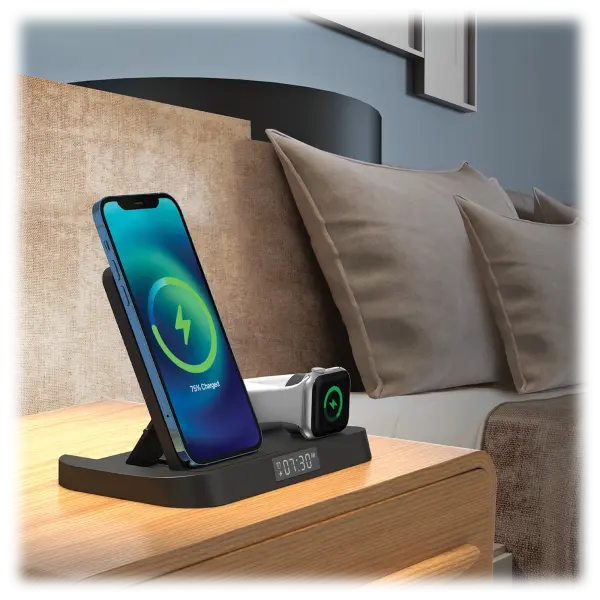
3-in-1 Wireless Charging Station
Phone, watch and earbuds on one pad. Quarterly sales keep climbing with the desk-setup trend.
🚚 Free shipping on most orders · price at time of writing
FAQ
Are cheap smartwatches worth it?
As a notification watch with a week of battery, yes — reviews are consistently happy at that expectation. As a fitness tracker, no: heart rate, sleep stages and calories at this tier are decoration.
Do $20 smartwatches work with iPhone?
For notifications, calls display and steps — yes, via their companion app. Replying to messages and deep iOS integration is where they stop; that's Apple Watch territory by design.
Is the heart rate on cheap smartwatches accurate?
At rest it's in the neighborhood; during exercise it drifts badly — a known limit of budget optical sensors on a moving wrist. Never treat any watch's readings as medical information.
→ See all LED & Desk Setup picks